
What "free" actually covers in a free AI agent
A free agent app and a free model are different things, and most pricing pages blur them. Here is how to read an agent offer in four questions, and where Saturday’s free beta stops.
- 1A free app and free tokens are two different claims.
- 2A subscription, an API key and a local model each cost differently.
- 3In this beta the app is $0; the model is yours to choose.
The job is one you might have every week. A ninety-minute team call is recorded. Someone has to turn it into a summary with the action items and save it next to the recording. It is dull, it is the same shape every time, and it is exactly the kind of work people look for a free tool to do.
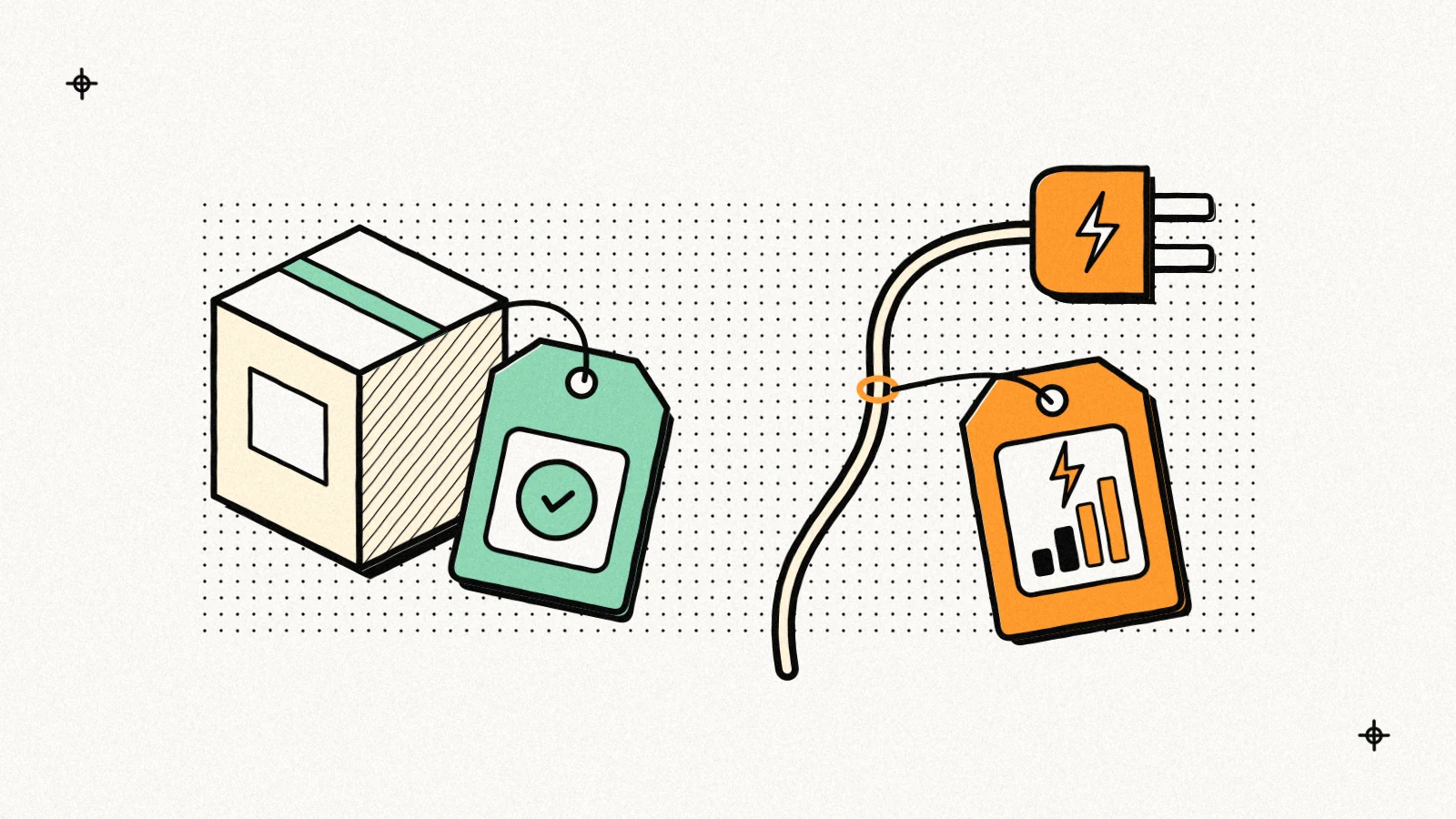
The phrase “free AI agent” hides two separate products: the software that plans and executes, and the model that does the reasoning. One can be free while the other is the largest line on your bill. Any comparison that does not separate them is a comparison of nothing.
Four questions that settle it
Ask these in order, with the call in mind. The answers matter more than the headline price.
- Does the price include model usage, or is the model billed separately? A seat price bundles a prediction of your usage plus a margin. A bring-your-own-key price passes the provider bill through at cost.
- What happens when you hit the limit? A pool that quietly stops is different from a cap that ends the run and tells you why.
- Can you see the split? If you cannot see tokens and dollars per run, you cannot tell whether the agent is efficient or just busy.
- What does leaving cost? Subscription agents tend to keep your history and habits. With your own key, changing provider changes nothing else.
Why seat pricing and token pricing are not comparable
A $20 seat and a $20 token bill are not the same purchase. The seat buys a right to use, priced for an average user. The token bill buys work, priced per unit. A light user subsidises a heavy one under seat pricing; a heavy user pays for their own loops under token pricing.
That is why “cost per finished job” is the only figure worth comparing. It depends on how many steps the agent takes, how much context it re-sends each step, and how often it fails and retries. The call summary makes it visible: a cheap model can listen to the same ninety minutes five times because it loses the thread, and cost more than one careful pass at a high rate.
So the fair question about the call is not “what does a thousand words of summary cost”. It is “what does one finished summary cost, including the retries”, and only a tool that shows you the run can answer it.
| Offer | What you pay | What it hides |
|---|---|---|
| Seat + bundled usage | A monthly fee per person | Your actual token volume, and the margin on it |
| Seat + usage pool | A fee plus top-ups | Where the pool boundary sits until you cross it |
| Free app + your key | Provider bill at cost | Nothing, if per-run cost is shown |
| Free app + local model | Electricity and hardware | Nothing, but the hardware limit is real |
What the Saturday beta is, precisely
The app is free on Windows, macOS and Linux. It ships 72 built-in tools in a default install (73 via `saturday tools`, 23 in plan mode), background computer use, MCP in both directions, an OpenAI-compatible endpoint, A2A, crews, routines and a hash-chained audit log. No account is required and no card is taken.
Model access has four routes: a Claude or ChatGPT subscription you already pay for, an API key from any of 22 built-in providers (19 cloud/remote APIs plus 3 local runtimes: Ollama, vLLM and llama.cpp), or any OpenAI-compatible endpoint you host. Each run can carry a dollar cap; a run that reaches it ends and the log says so.
What is not free
Two things, and both should be said plainly. First, a frontier model costs money per token, whoever bills you. Second, the beta build is not code-signed on Windows or macOS, so the installers carry a warning. The release notes publish a SHA-256 for every installer so you can verify the file before running it.
When a managed plan exists, it will be priced on this site with the model included, the limits stated, and the date the price was checked. Until then, the honest answer to "how much" is: the app is $0, and your model bill depends on what you choose.
How to decide in one sitting
Install it, connect a model, and run the call through it once. “Take last week’s team call recording, write a summary with the action items, and save it next to the recording.” If the result is right and the record is readable, the question is no longer “is it free” but “what does this job cost me per month”. That is a question you can answer from your own log rather than from a pricing page.
And the limit worth knowing before you start: a local model is free per token and slow on long audio, so a ninety-minute call is a patience test rather than an instant result. A cloud model is fast and bills you. There is no route where the thinking is both free and quick, which is the whole reason the two lines on the bill are separate.
Questions people ask
Is Saturday really free?
The Saturday app is free during its beta on Windows, macOS and Linux. Model usage is not included: you connect a subscription you already pay for, an API key, or a local model. With a local model, the cost is $0 per token.
What is the catch with a free app that uses paid models?
There is no markup, but there is still a bill if you use a paid model. The honest test is whether the app shows you that bill and lets you cap it. Saturday shows token and dollar cost when the provider reports it and enforces a per-run cap.
Will it stay free?
The beta is free. Two models are planned afterwards: bring your own key, and a managed plan where the model is included. Neither has a price yet, and this site will not publish one until it is real.
Try Saturday on your own machine
Free during the beta · 72 built-in tools · 22 providers (19 cloud, 3 local) · no account needed.